Padel Racket vs Tennis Racket: Key Differences Explained
Padel racket vs tennis racket: construction, weight, sweet spot, power, handle and cost compared, plus which tennis skills carry over to padel and which don't.
By PadelRadar editorial teamUpdated
Key takeaways
- A padel racquet has no strings: it is a solid, perforated paddle with a foam or EVA rubber core, shorter and usually heavier than a tennis racquet.
- In padel, power comes from the racquet’s weight, balance and core stiffness rather than from a string bed.
- A padel racquet has a short handle and a wrist strap, so two-handed backhands and long tennis swings don’t carry over.
- Volleys, touch and court sense transfer well from tennis; heavy topspin groundstrokes do not.
- Tennis players usually adapt fastest with a round or low-balance teardrop padel racquet.
Round padel racquets stocked by the most shops
Round racquets have the most forgiving sweet spot, which makes the switch from tennis easier. Sorted by how many shops stock them. Not every listing states a shape, so this is a sample.
- 1
 Neuron 02
Bullpadel · 11 shops
€174.95-45% - 2
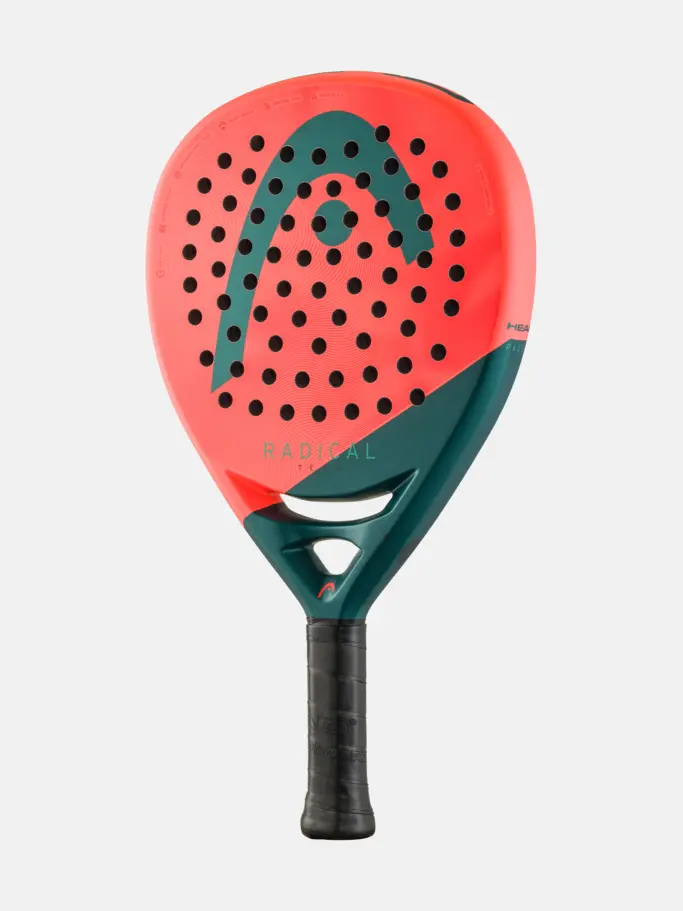 Radical Team Padel Racquet
Head · 10 shops
€109.16-27% - 3
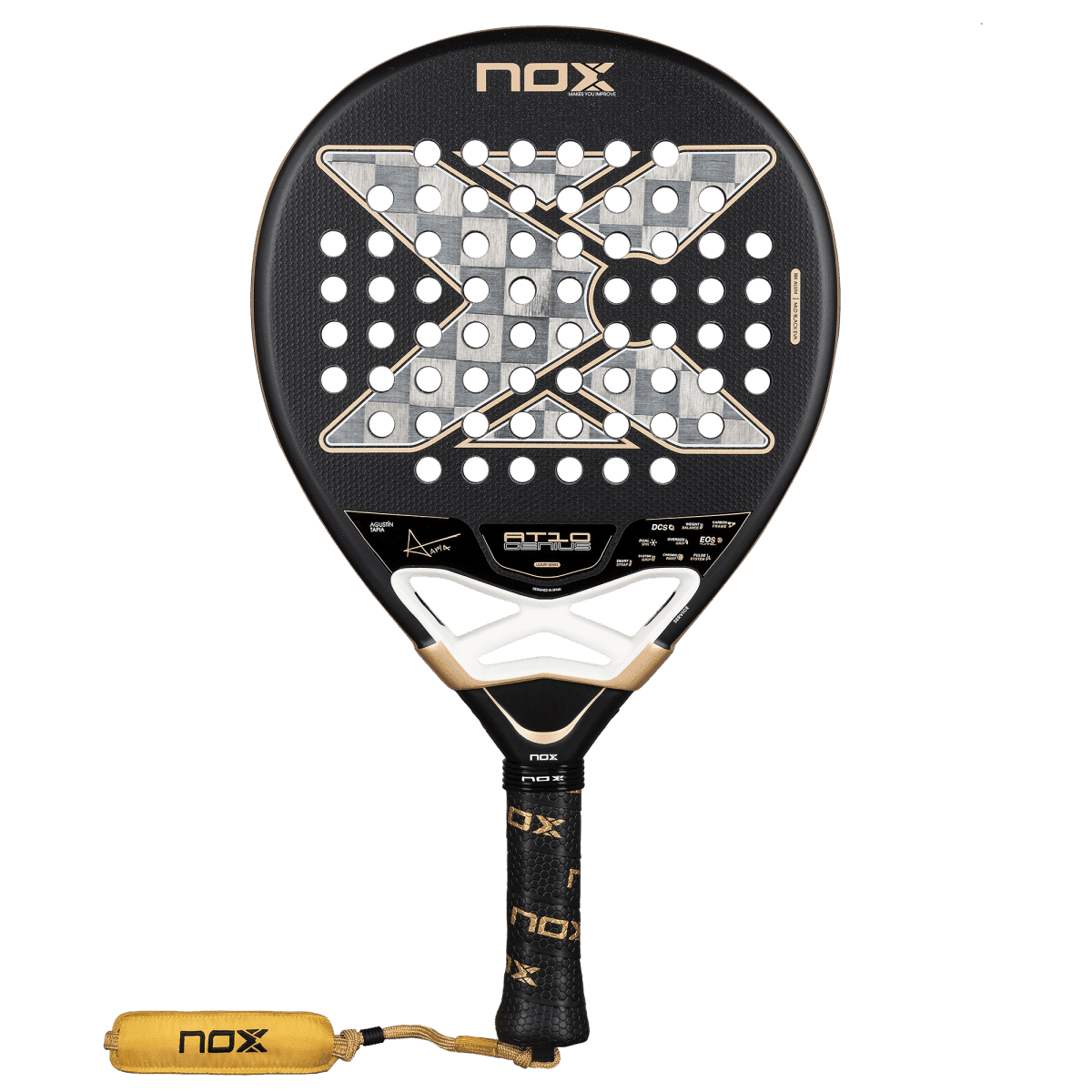 AT10 Luxury Genius 18K Alum 2026 by Agustín Tapia
Nox · 10 shops
€190.01-41% - 4
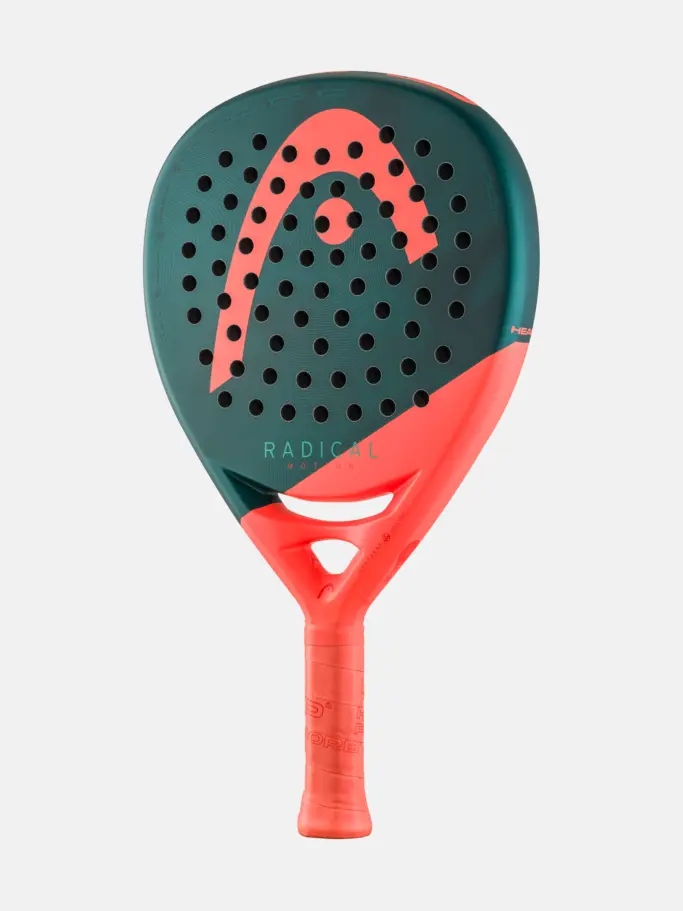 Radical Motion Padel Racquet
Head · 9 shops
€113.36-32% - 5
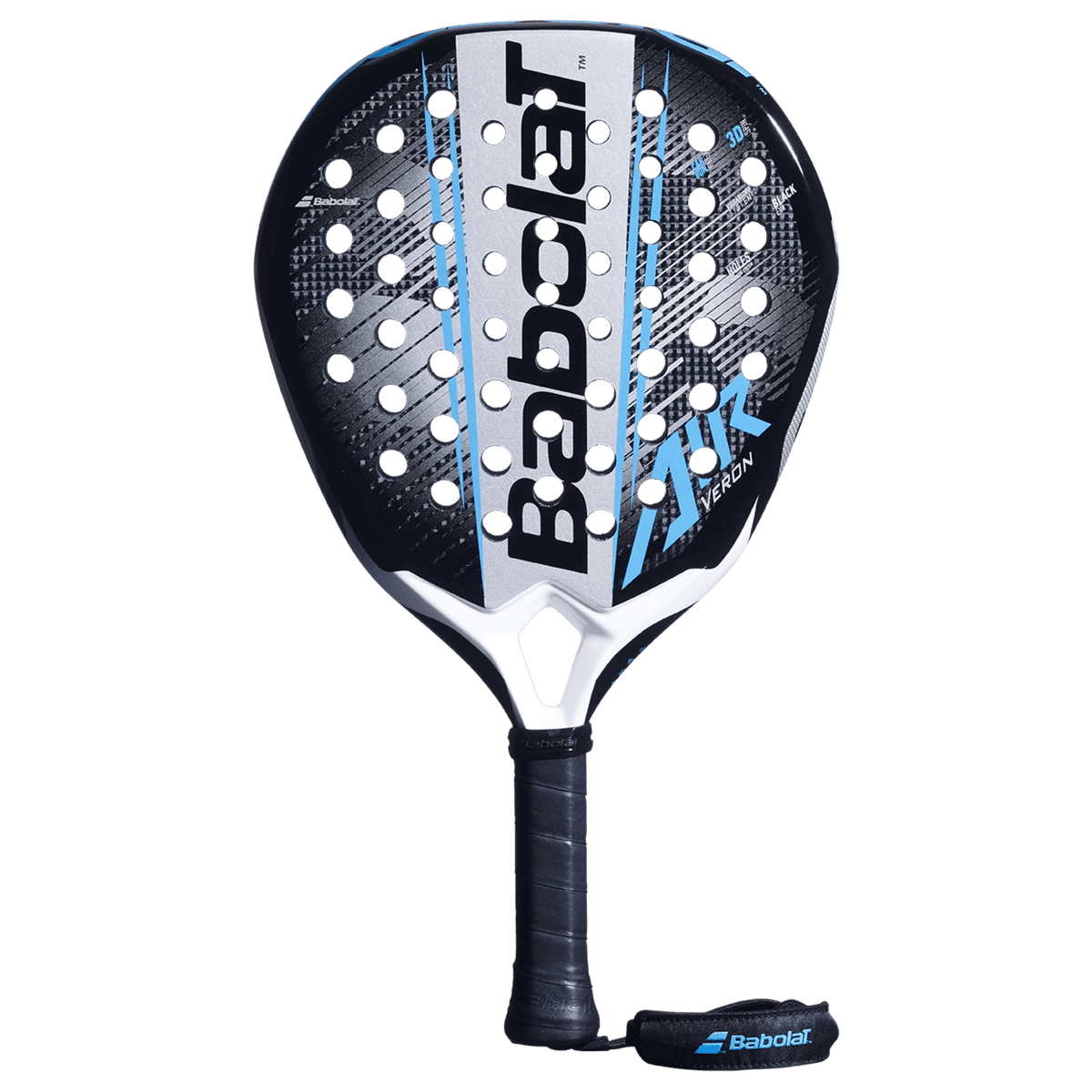 Air Veron 2.6
Babolat · 9 shops
€125.97-37% - 6
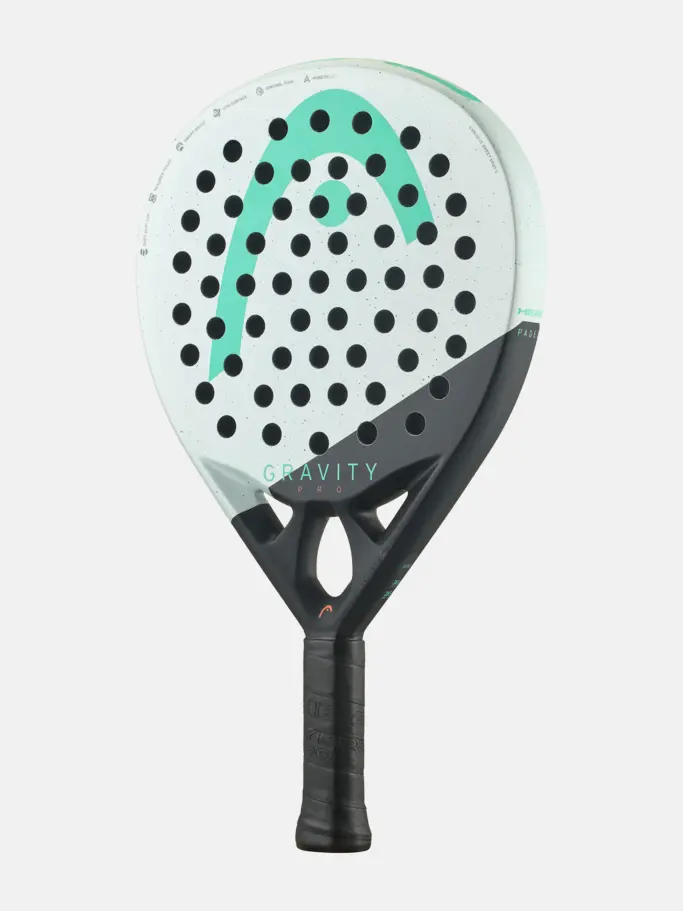 Gravity Pro Padel Racquet
Head · 9 shops
€134.37-33%
Prices checked on 13 October 2026: lowest in-stock price across the shops we compare, in euros.
A padel racquet is a solid, stringless paddle with a perforated face, around 45 cm long and usually heavier than a tennis racquet, with a short handle and a wrist strap. Its power comes from weight, balance and the core rather than from strings, and it never needs restringing. If you are coming from tennis, your volleys and touch will transfer; your big topspin swing will not.
Padel racquet vs tennis racquet at a glance
| Tennis racquet | Padel racquet | |
|---|---|---|
| Hitting surface | Open string bed | Solid, perforated face of fibreglass or carbon over a foam or EVA core |
| Length | About 68 to 71 cm | Around 45 cm |
| Weight | About 280 to 340 g unstrung | Roughly 340 to 385 g |
| Handle | Long, built for two-handed shots | Short, with a wrist strap |
| Power comes from | Swing speed and the string bed | Weight, balance and core stiffness |
| Upkeep | Regular restringing | None, but the core loses liveliness over time |
Shape and construction
Tennis racquets have an open string bed stretched across an oval frame. Padel racquets are solid, with a perforated face made of fibreglass or carbon fibre over an EVA rubber or foam core.
The solid construction gives padel racquets a completely different feel. Instead of strings absorbing and launching the ball, the core and the face material handle the energy transfer.
Sweet spot and control
Tennis racquets have a large, well-defined sweet spot set by string tension and pattern. A padel racquet’s sweet spot depends mostly on its shape (see our racquet shapes guide):
- Round padel racquets have a centred, forgiving sweet spot, the closest feel to a well-strung tennis racquet
- Teardrop racquets sit in between, with a slightly higher sweet spot and more power
- Diamond padel racquets have a high, small sweet spot that rewards precise hitting
Power generation
In tennis, power comes from racquet head speed, string tension and the trampoline effect of the string bed. In padel, it comes from:
- Racquet weight and balance: head-heavy racquets generate more power
- Core stiffness: harder cores return more energy on fast shots
- Surface texture: rough faces add spin, which makes shots more effective
Our guide on padel racquet weight explains how weight and balance change the feel.
The handle and the strap
Tennis racquets have long handles designed for two-handed backhands and serve leverage. Padel racquets have a short handle with a wrist strap. The strap is mandatory in competition: it stops the racquet from flying across an enclosed court.
Which skills transfer?
If you play tennis, several skills help in padel:
- Volleying: padel rewards good net play
- Slice and touch: similar wrist control applies
- Court positioning: reading angles translates well
What does not transfer: big topspin groundstrokes. Padel rewards flat or sliced shots and relies more on placement and on using the walls than on raw power.
Cost comparison
Tennis racquets typically cost €150 to €300 for performance models. Most padel racquets sell for between about €50 and €350, and the best value usually sits between €100 and €200. With no strings, there are no restringing costs, but padel racquets wear out faster (1 to 2 seasons for regular players) because the core loses its bounce over time.
Ready for your first padel racquet? Our beginner’s guide explains which shape and weight to start with, and the racquets page on PadelRadar, the padel price comparison site, shows today’s lowest prices from around 20 European shops.
Frequently asked questions
Can you use a tennis racket to play padel?
No. Padel is played with a solid, stringless padel racquet with a wrist strap, and a tennis racquet is not allowed in padel matches. It would also be too long for close volleys and play off the walls. Most clubs rent or lend padel racquets, so you can try the sport before buying one.
Is padel easier than tennis for beginners?
For most people, yes. The court is smaller, the serve is hit underarm, the racquet is short and the walls keep the ball in play, so beginners get real rallies within their first sessions. Padel is played in doubles, which also reduces the ground each player covers. Tennis players usually progress quickly, although positioning and wall play take time to learn.
Why do padel rackets have holes?
The holes make a solid padel racquet lighter and let air pass through the face, so it swings faster and is easier to handle at the net. The number, size and layout of the holes also change the feel: brands use different patterns to tune control, power and comfort. The holes are part of the design, not a sign of a cheaper racquet.
How long does a padel racket last compared with a tennis racket?
A padel racquet played two or three times a week usually lasts one to two seasons before its core loses liveliness and the face wears. A tennis frame often lasts longer, but it needs regular restringing, which a padel racquet never does. Occasional padel players can keep a racquet much longer, especially with a frame protector and careful storage.
Which padel racket should a tennis player buy?
Most tennis players adapt fastest with a round or low-balance teardrop padel racquet of medium weight and a soft to medium core. That combination forgives off-centre hits while your timing adjusts to the walls and the shorter racquet. Leave head-heavy diamond racquets until your padel technique is solid, because a full tennis swing tends to overhit with them.
Related guides
- Best Padel Racket for Beginners in 2026: How to ChooseBest padel racket for beginners: the shape, weight and budget to pick, plus today's cheapest beginner-friendly racquets from around 20 European shops.
- Padel Racket Shapes: Round vs Teardrop vs Diamond ExplainedRound, teardrop or diamond? How padel racket shape changes sweet spot, balance, control and power, which suits your level, and today's prices by shape.
- Padel Racket Weight: How Heavy Should Your Racket Be?How heavy should a padel racket be? Weight bands by level and build, why balance matters as much as grams, and how to pick a weight that spares your arm.
- Cheap padel racquets: the best under €100 todayCheap padel rackets under €100, compared daily across around 20 European shops: today's lowest prices, what a budget racquet gets you and when to buy.